Maria Grazia Chiuri has made the exploration of femininity one of the recurring themes of her career. Through her designs, she has examined how women relate to fashion, how clothing influences confidence and how the body becomes part of the visual language of dress. For Spring/Summer 2027 at Fendi, that investigation takes a more intimate turn, bringing lingerie, transparency, movement and revealing silhouettes together in a collection built around physicality.
Chiuri found her inspiration in one of Italy’s most recognizable cultural figures: Raffaella Carrà.
The singer, dancer and television icon became synonymous with glamour, energy and an unapologetic approach to performance. Her influence gives the collection a distinctly Italian character while allowing Chiuri to revisit a period when fashion, entertainment and popular culture were closely connected.
Among the designer’s references were Carrà’s appearances on Milleluci, including her memorable performances with Adriano Celentano. Their choreography was highly physical, turning movement and interaction into part of the spectacle. For Chiuri, that relationship between bodies in motion provided an important starting point for the collection.
The runway reflects that idea from the very beginning.
Carrà’s personal style often celebrated the female figure through fitted catsuits, mesh, flared trousers and sparkling bralettes. Chiuri brings those familiar elements into Fendi’s contemporary vocabulary, keeping their sensual character while giving them a more refined and modern treatment.
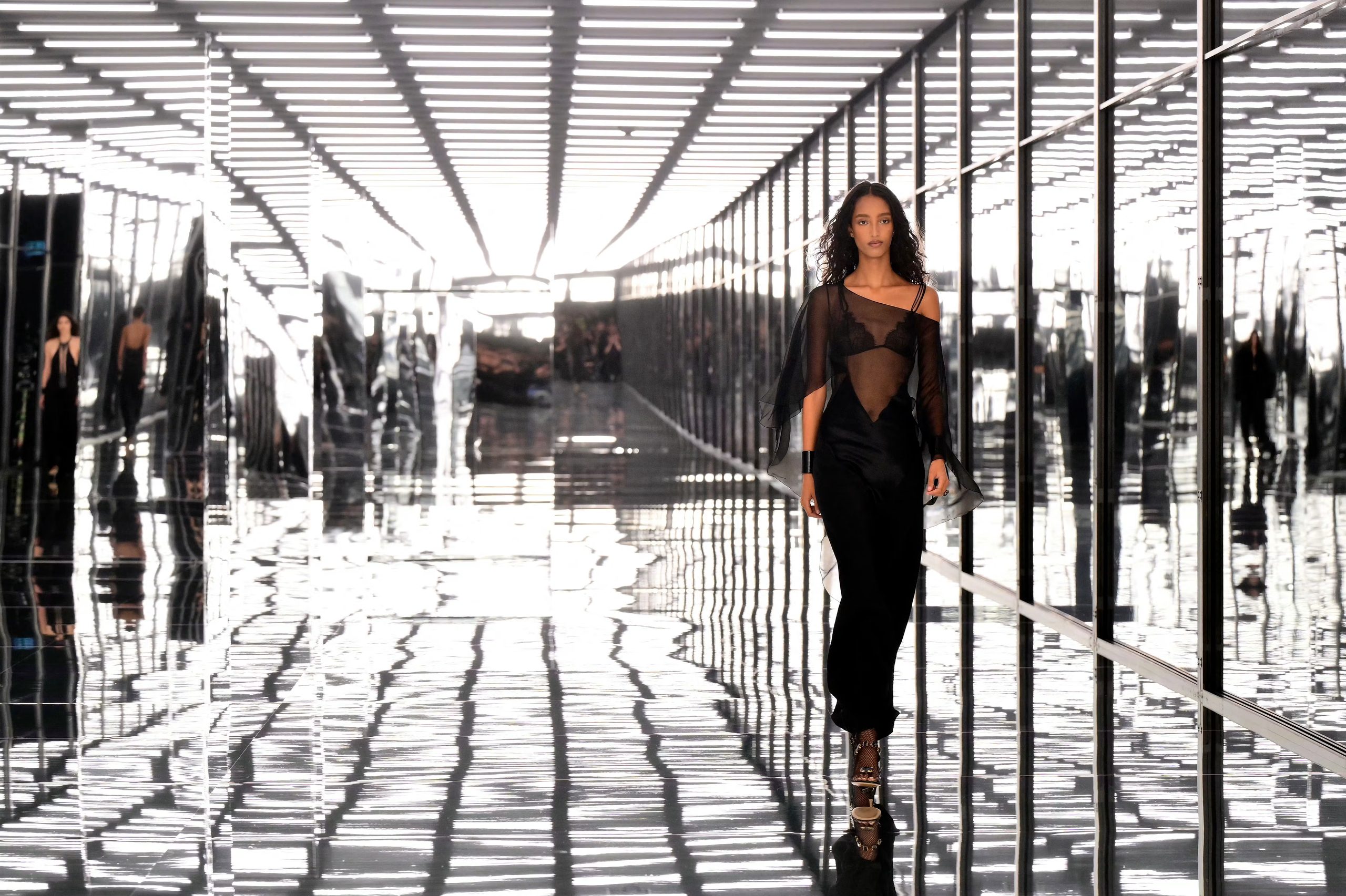
A sleek black jersey catsuit stands out as one of the clearest examples. Its fitted shape is paired with long sleeves, exposed shoulders and metallic grommet details, creating a balance between sensuality and attitude. Rather than copying Carrà’s original wardrobe, Chiuri translates its confidence into a distinctly contemporary silhouette.
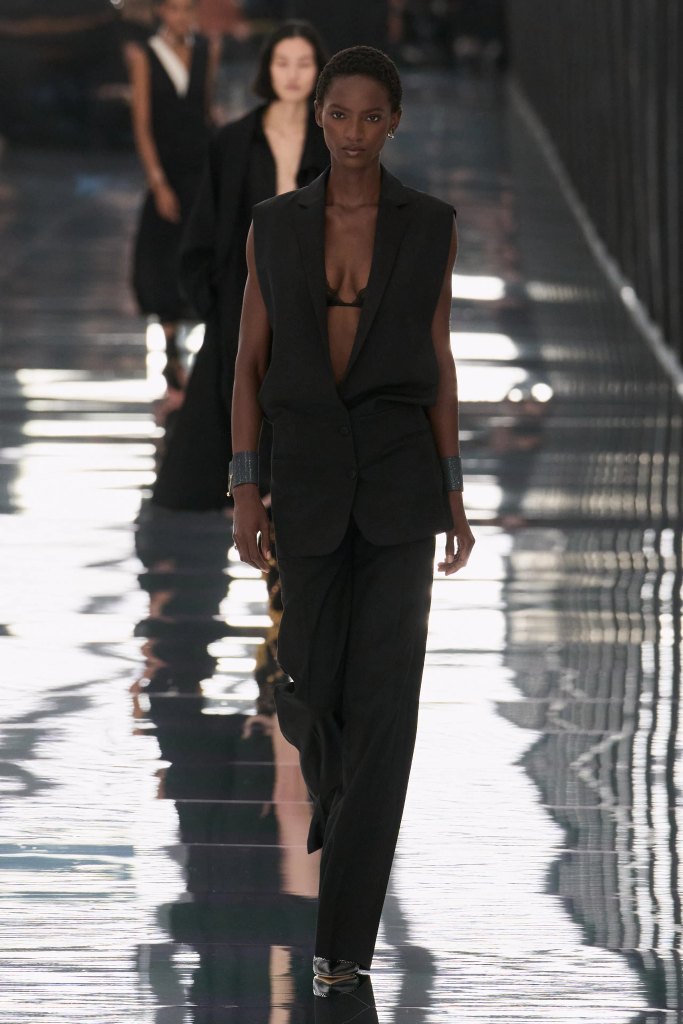
The 1970s also appear through the collection’s eveningwear.
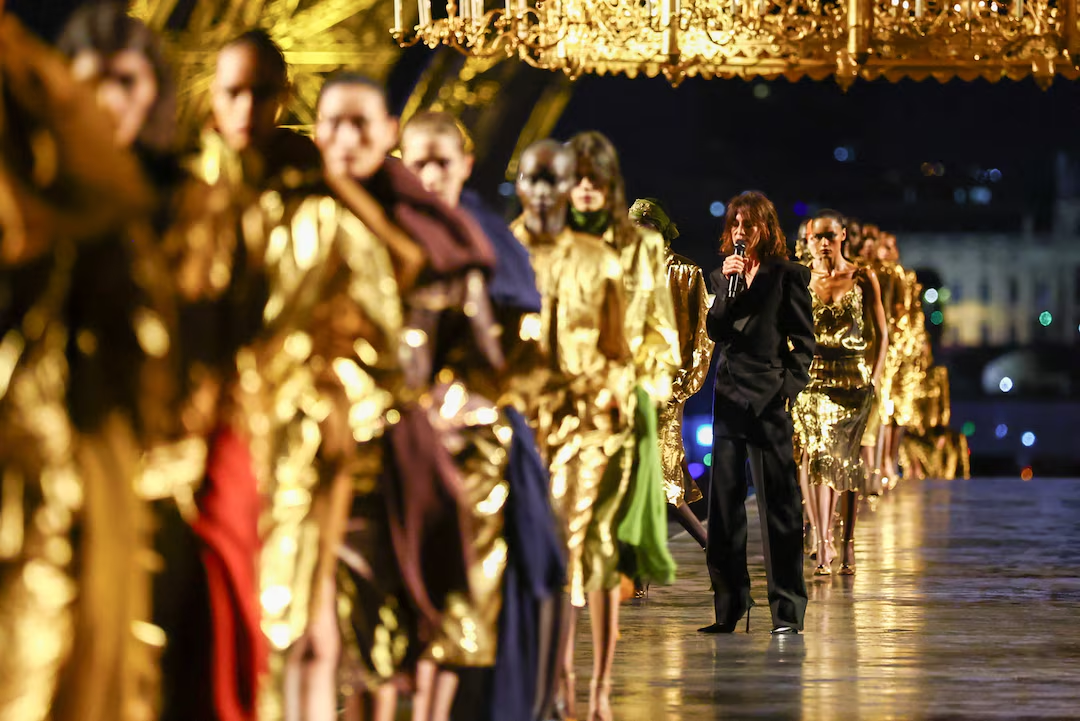
Elaborately embellished maxi dresses sparkle as they move, recalling the theatrical glamour of disco and the nightlife culture surrounding places such as Studio 54. These looks introduce a sense of extravagance, but they also reinforce the collection’s interest in movement and the way clothes interact with the body.
That relationship becomes even more apparent through lingerie.
Chiuri takes pieces traditionally associated with privacy and brings them into the open. Satin shorts finished with delicate lace are paired with matching triangle bras in teal, peach and black, transforming underwear into a visible component of the outfit.
The approach is intentional rather than provocative for its own sake.
Lace becomes an important decorative element, while satin introduces softness, texture and shine. Bras are incorporated directly into the silhouette, challenging the conventional idea that underwear should remain invisible beneath clothing.
Transparency pushes the concept further.
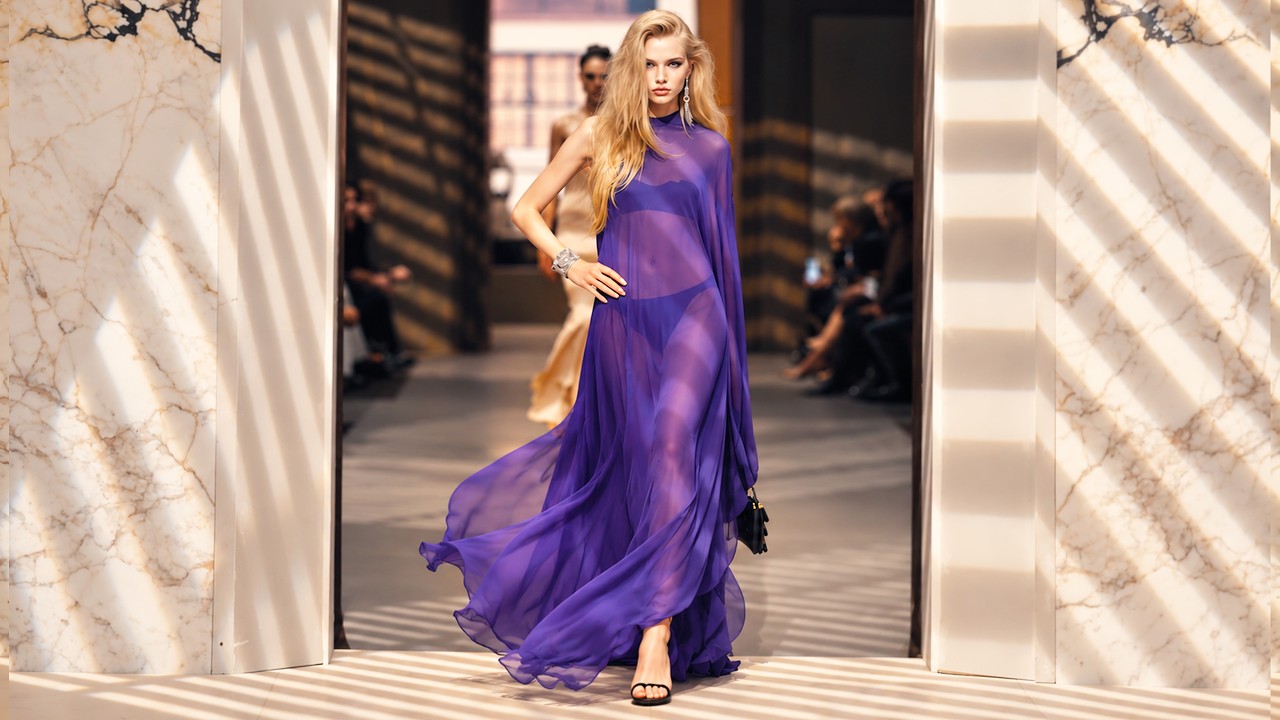
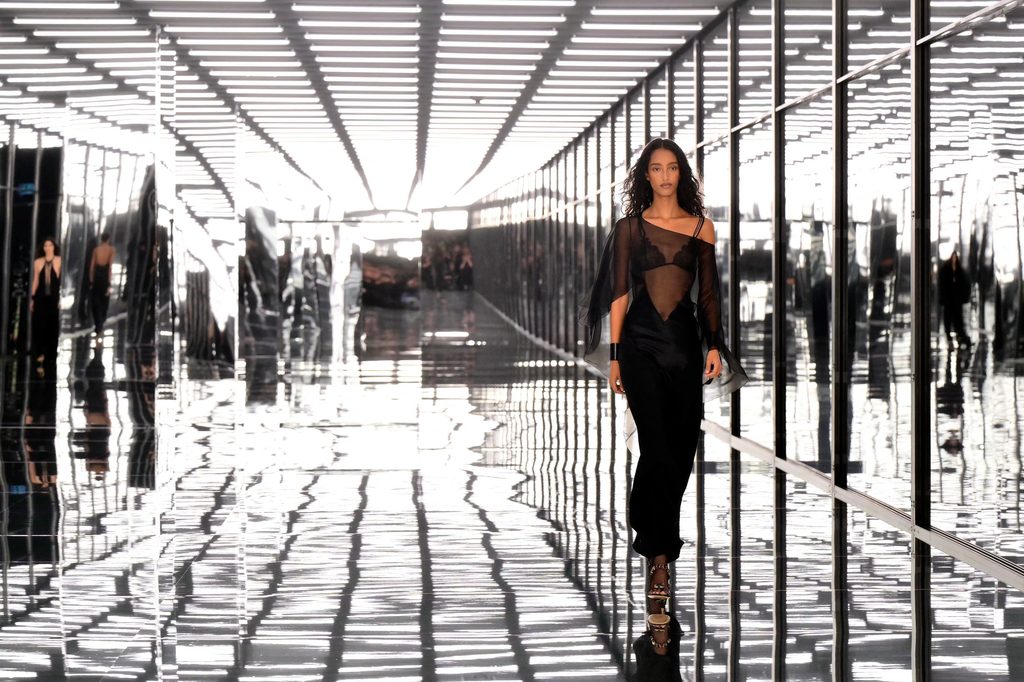
Sheer chiffon dresses allow the contours of the body and the garments underneath to remain visible. Plunging necklines reveal flashes of skin and lace, while fringed tunics shift around the figure as the models walk.
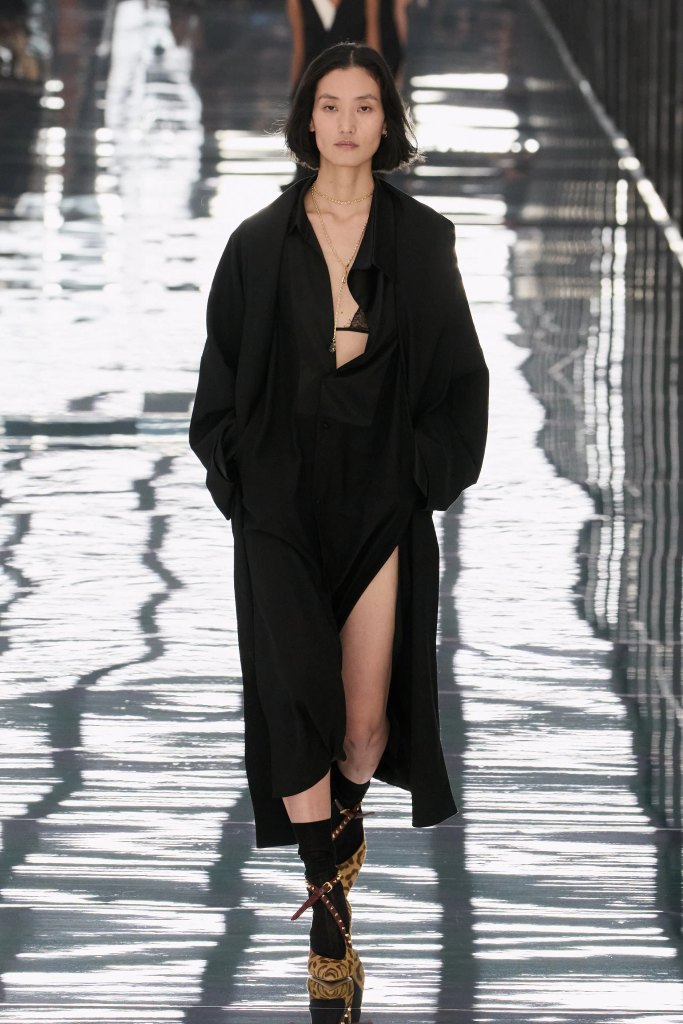
Thigh-high playsuits feature strategically positioned cutouts, drawing attention to the legs and waist while creating additional movement within the silhouettes.
Although these designs are undeniably sensual, Chiuri’s approach is rooted in a broader investigation of intimacy.
The body is not treated simply as something to display. Instead, clothing becomes a way of considering how individuals experience themselves physically and how fashion can influence that experience.
E. E. Cummings’ poem I Like My Body When It Is With Your adds a literary dimension to the collection. Its exploration of physical closeness and emotional connection complements Chiuri’s interest in the body as something connected to intimacy, desire and relationships.
That perspective is visible in the collection’s constant balance between revealing and concealing.
A transparent garment may expose the silhouette while still placing a layer between the wearer and the observer. A plunging neckline can reveal skin while maintaining a sense of structure. Exposed lingerie can appear intimate while simultaneously becoming part of a highly public fashion statement.
These contradictions are essential to the collection.
Chiuri moves between strength and delicacy, exposure and privacy, structure and fluidity. Some garments closely follow the body, while others float around it. Certain looks reveal specific areas of skin, while others create distance through layers of transparent fabric.
The choice of materials strengthens these contrasts.
Body-hugging jersey emphasizes form and movement. Lace introduces fragility, while chiffon creates an almost weightless quality. Elaborate embellishments add drama and glamour, and fringe ensures that the garments remain constantly animated.
Yet even at its most revealing, the collection remains grounded in Fendi’s tradition of luxury.
The construction is precise, the materials are carefully selected and the embellishment is intricate. Lingerie-inspired pieces are elevated into sophisticated fashion rather than presented simply as underwear. The sensuality is balanced by craftsmanship and control.
Carrà’s influence gives the collection an additional cultural dimension.
She belonged to a generation of Italian entertainers who understood the power of performance and personal style. Her clothing was never separate from her stage presence; it helped define how she moved, performed and connected with an audience.
Chiuri takes that same idea and adapts it for contemporary Fendi.
Instead of recreating Carrà’s most recognizable looks, she focuses on the qualities behind them: confidence, energy, glamour, sensuality and freedom. Those characteristics become the foundation for a modern wardrobe.
The result is nostalgic without being trapped in the past.
Sparkling gowns reference disco glamour, while lingerie-inspired pieces bring the collection firmly into the present. Sleek jersey contrasts with sheer chiffon, while lace and fringe add softness and movement to body-conscious silhouettes.
Movement is ultimately one of the collection’s strongest themes.
Chiuri treats the body as an active part of the design rather than simply the form beneath a garment. Clothes are created to shift, stretch, reveal and conceal as the wearer moves, making the interaction between fabric and figure central to the collection.
For Fendi, Spring/Summer 2027 becomes an exploration of that relationship.
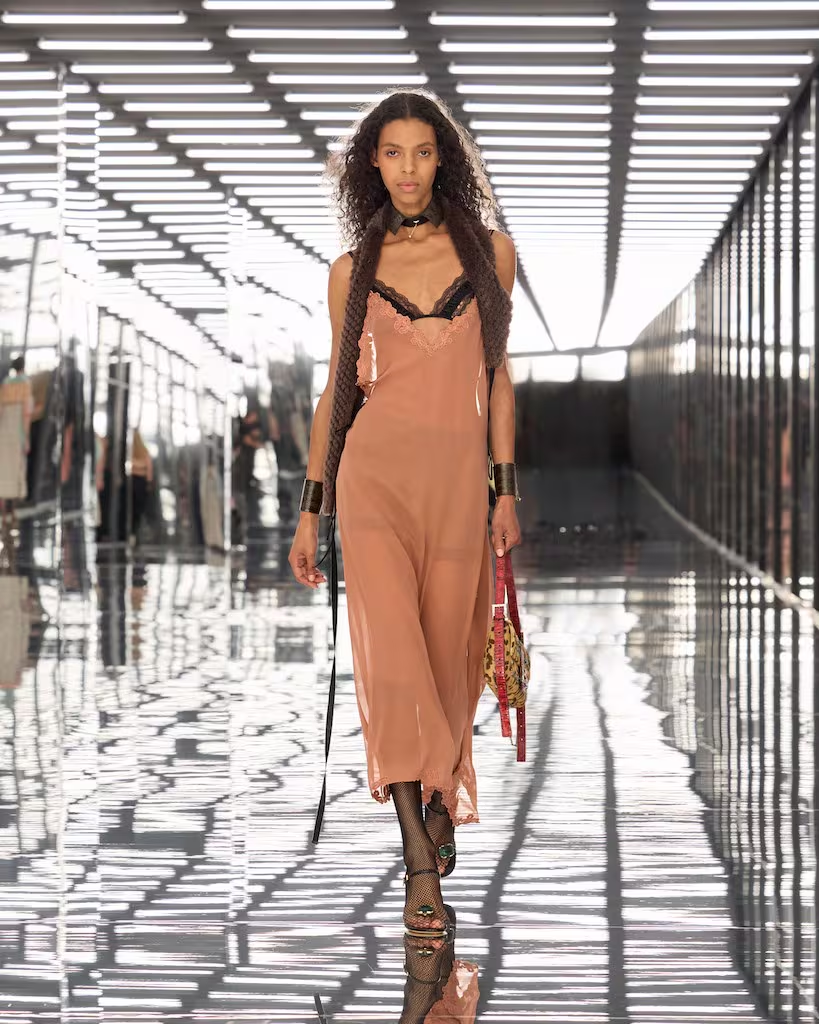
The clothes consider how fashion can communicate confidence, intimacy and individuality while remaining connected to the glamour of Italian culture. Chiuri combines historical references with contemporary construction to create a wardrobe that feels familiar yet distinctly new.
With Raffaella Carrà as her muse, the designer brings together disco-era energy, lingerie dressing and Fendi craftsmanship in a collection that embraces the complexity of the body.
It is glamorous but not overly nostalgic, revealing yet controlled, and sensual while maintaining a sophisticated edge. For Spring 2027, Fendi turns the relationship between clothing and the body into its most powerful form of expression.