A new creative vision begins as Demna presents his first show for the historic Italian fashion house.

This season at Milan Fashion Week, one runway show stood out above the rest. Gucci introduced its Fall/Winter 2026/2027 collection in a presentation that marked a major turning point for the brand. The show represented the first official runway under the direction of the house’s new creative leader, Demna, signaling the beginning of a fresh era for the legendary Italian label.
For Gucci, the moment carried considerable importance. Established in Florence in 1921 by Guccio Gucci, the brand has long been recognized for its craftsmanship, bold design language, and influence on global luxury fashion. Over the decades, Gucci has continuously reinvented itself while maintaining its distinctive identity. However, in recent years the company has faced increasing pressure as the luxury market evolved and consumer expectations shifted.
In response to these challenges, its parent company, Kering, has been determined to revitalize the brand and restore its creative momentum. The appointment of Demna as creative director last year was widely viewed as a strategic move designed to inject new energy into the house.
The Georgian-born designer built his reputation during his decade-long tenure at Balenciaga, where he became known for his bold and often unconventional approach to fashion. His work frequently blurred the lines between streetwear and luxury, attracting a younger audience while pushing the boundaries of traditional design codes.
With his first Gucci collection, titled “Gucci Primavera,” Demna offered a preview of how he intends to reinterpret the brand’s heritage. The runway environment itself reflected this dialogue between past and present. Models walked through a striking set composed of large marble staircases surrounded by classical sculptures. The dramatic staging evoked the grandeur of Florence and its artistic heritage, with many observers noting similarities to the renowned Uffizi Gallery.

Across the runway, Demna presented 83 different looks combining both womenswear and menswear. The collection showcased a broad spectrum of styles and identities, suggesting that the designer aims to create a diverse fashion universe within the Gucci brand.
Although Demna is often associated with experimental concepts, his approach for Gucci appears to embrace a softer and more emotional tone. In a letter shared with the press and on social media, the designer explained that his vision focuses on refinement and feeling rather than complex intellectual ideas.
“I want Gucci to become lighter, softer, more refined and more emotional,” he wrote. “Sometimes it can even be irrational. I don’t want it to feel overly intellectual.”
This philosophy was particularly evident in the womenswear portion of the show. Many of the outfits emphasized sleek silhouettes and sensual styling. Low-rise leggings styled as trousers appeared in several looks, often paired with fitted tops and structured jackets. Mini dresses and miniskirts brought a youthful spirit to the collection, while stockings decorated with the iconic double-G monogram reinforced the brand’s visual signature.

Outerwear added dimension and drama to the runway. Faux-fur coats created striking volumes, contrasting with the streamlined silhouettes underneath. Bomber jackets introduced a casual and slightly rebellious attitude, offering a balance between elegance and everyday wear.
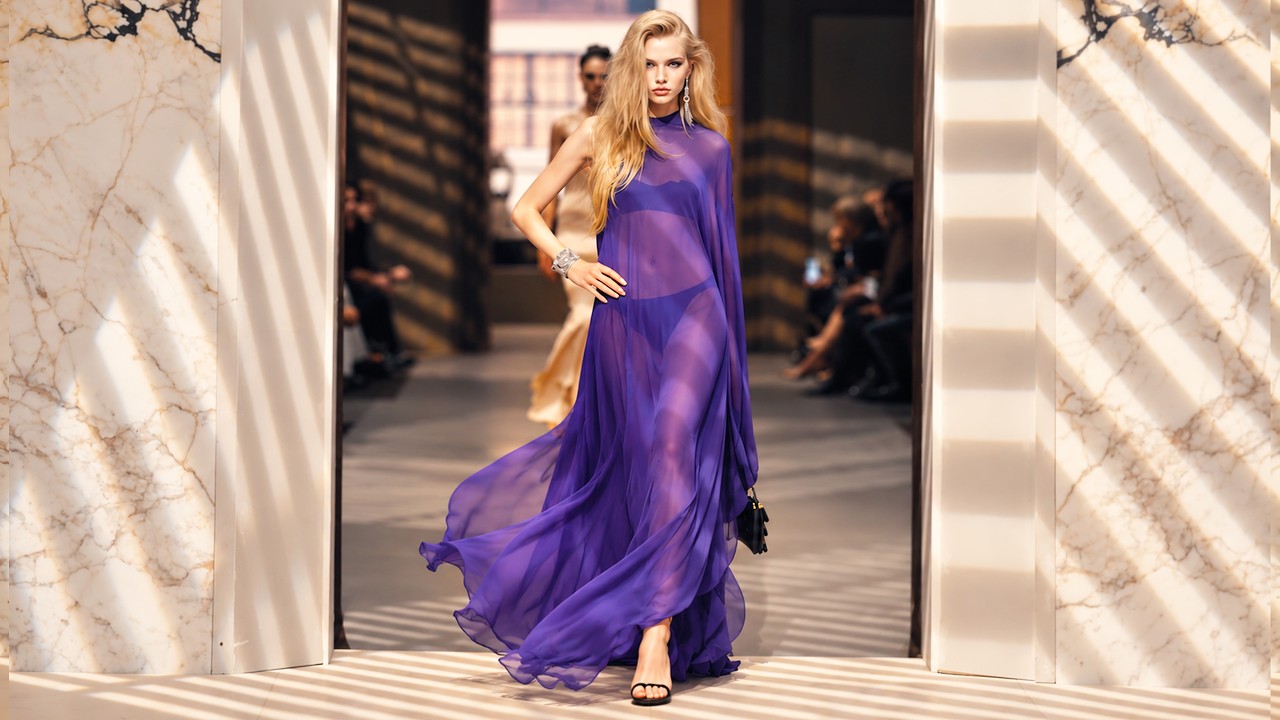
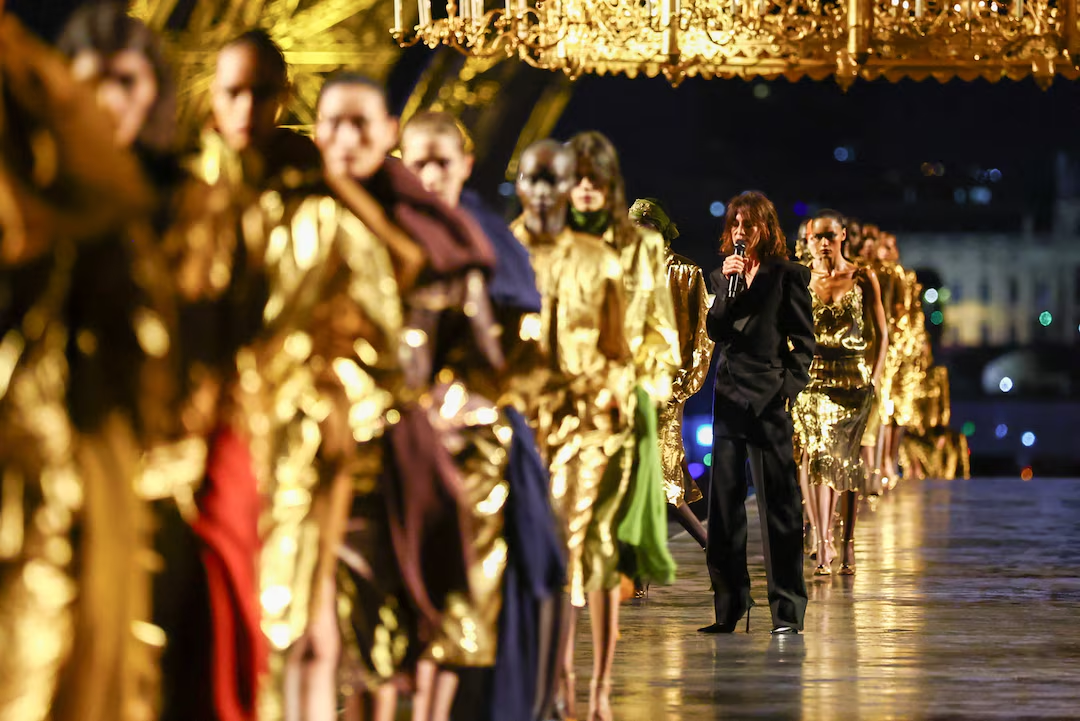
Eveningwear also played an important role in the presentation. As the show progressed, several shimmering gowns appeared on the runway. Crafted from metallic fabrics that reflected the light with every step, these designs demonstrated Gucci’s continued ability to create glamorous statement pieces suited for formal events and red-carpet appearances.
Menswear brought a different kind of energy to the collection. Male models appeared in body-hugging tops that highlighted athletic physiques, often paired with biker jackets that added a rugged edge. Oversized leather footwear in bold red and white tones quickly became one of the most discussed design elements of the show, introducing an exaggerated and slightly surreal detail often associated with Demna’s signature style.
Accessories, an essential part of Gucci’s business, were also prominently featured throughout the presentation. Several models carried cross-body belt bags, one of the brand’s most recognizable modern accessories. These pieces continue to resonate strongly with younger luxury consumers and remain an important part of Gucci’s commercial strategy.

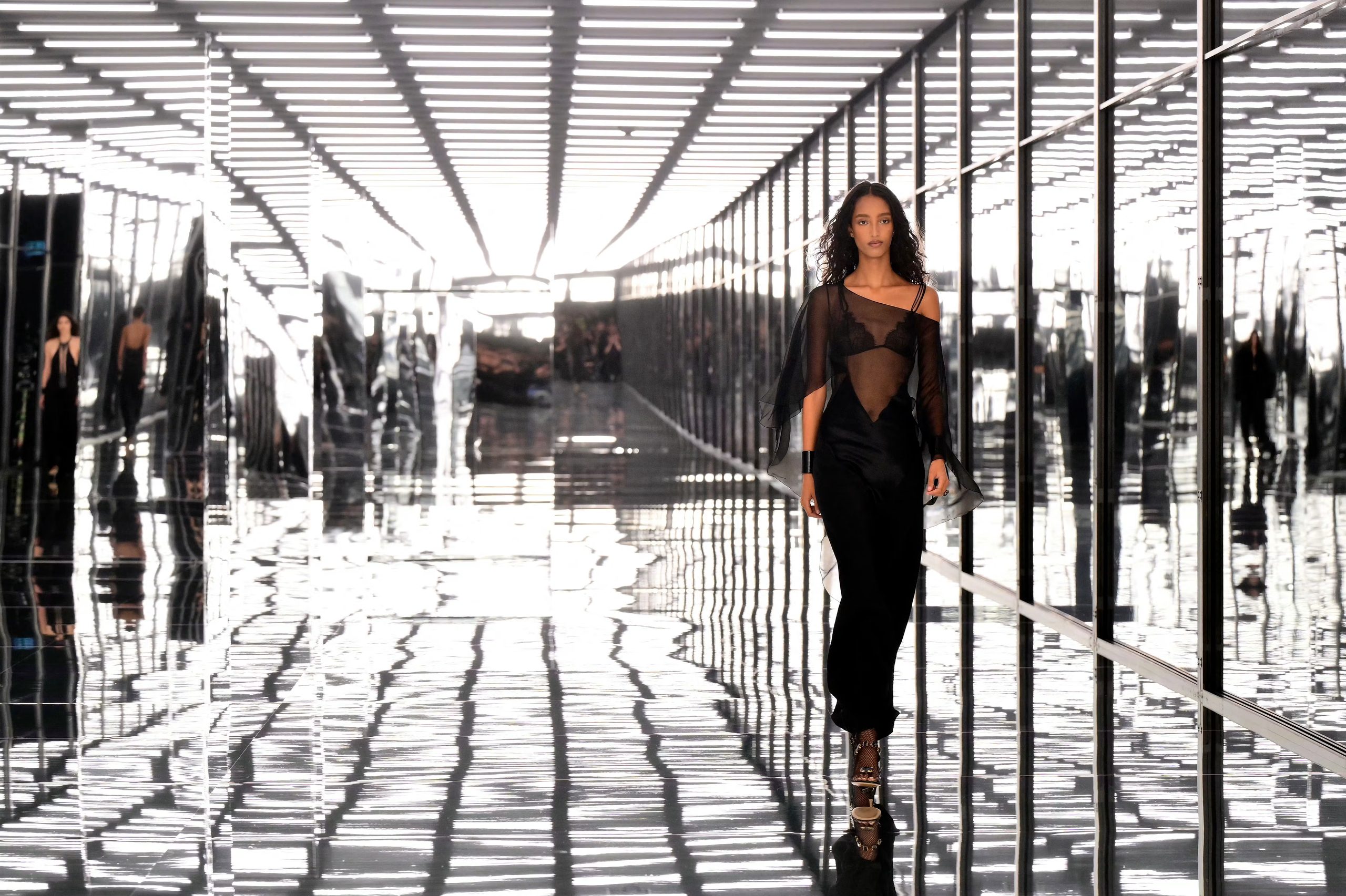
The runway presentation concluded with a memorable finale. Supermodel Kate Moss stepped onto the runway to close the show wearing a sparkling black evening gown with an open back. As she walked, the design subtly revealed a thong embroidered with the golden double-G logo—a bold detail that quickly sparked conversation among guests and fashion commentators.
Fashion insiders were quick to point out similarities between Demna’s debut and the glamorous period shaped by Tom Ford in the 1990s. Ford famously revitalized Gucci during that era by introducing a seductive, polished aesthetic that helped redefine the brand’s image.
Several elements of that decade seemed to reappear in the new collection. Smoky eye makeup, glossy materials, and silk shirts evoked the sensual style that once dominated Gucci’s runways. For longtime followers of the brand, these references may signal a deliberate effort to reconnect with one of the house’s most celebrated creative periods.
The timing of this new collection is particularly significant. After experiencing strong growth following the pandemic, the luxury industry has recently slowed as consumers become more selective in their spending habits. According to estimates from consulting firm Bain & Company, the sector has lost tens of millions of customers since the end of the post-pandemic shopping boom.
To address these challenges, Kering has launched a broader strategy aimed at strengthening Gucci’s global appeal. The company recently appointed Luca de Meo to help lead this transformation and support the brand’s return to growth.

Following the runway presentation, De Meo expressed optimism about the direction the brand is taking, highlighting the renewed creative energy surrounding Gucci.
For Demna, this Fall/Winter 2026/2027 show represents only the first step in shaping the future of the house. Selected pieces from the collection are expected to appear in boutiques and online platforms ahead of the official launch scheduled for July 2026.
As the fashion world continues to reflect on one of the most talked-about shows of the season, one thing is certain: Gucci has entered a new creative chapter, and the industry will be watching closely to see how Demna’s vision unfolds.