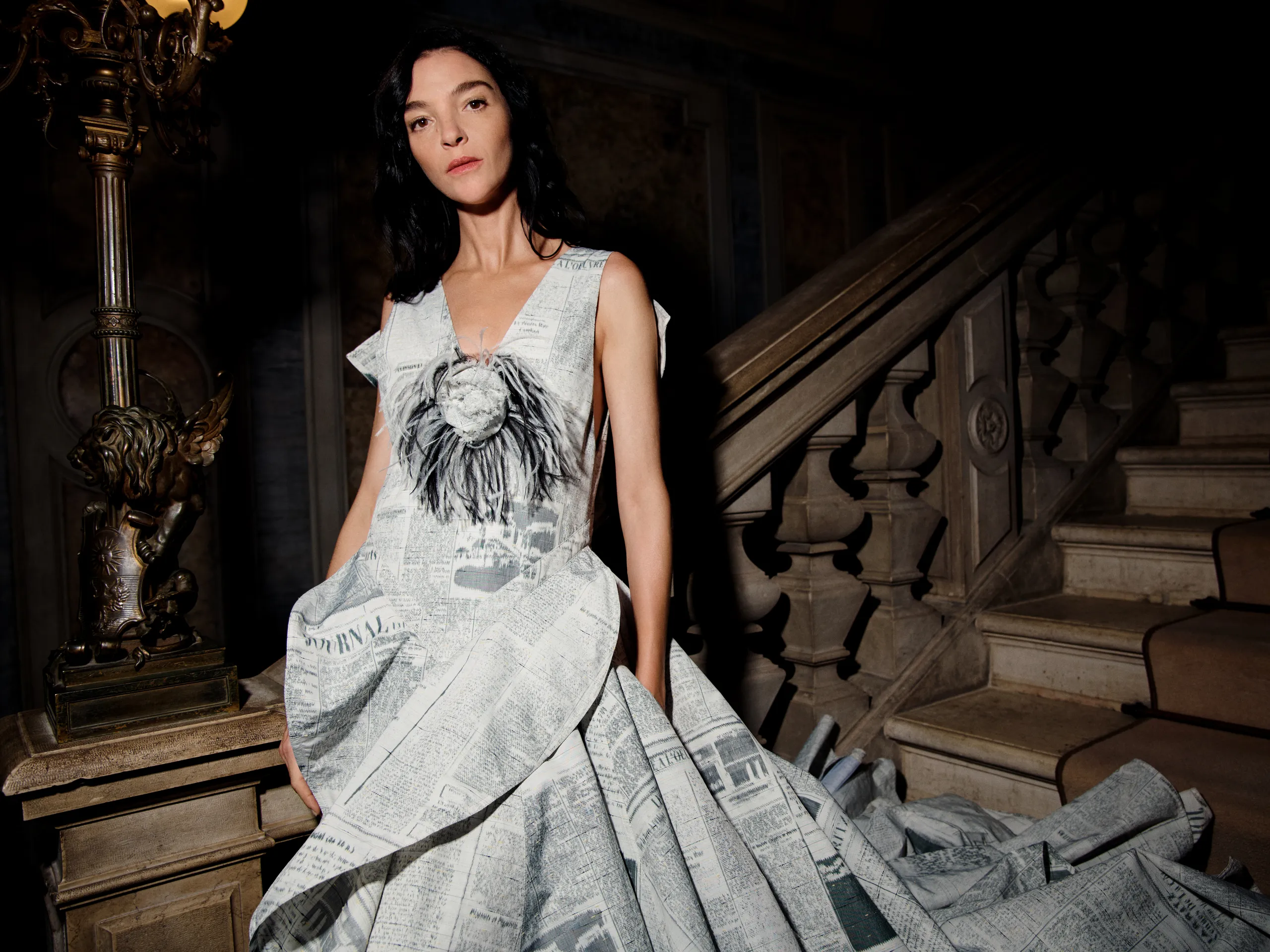
Where clothing meets art, and the human body becomes the ultimate canvas.

The Metropolitan Museum of Art has officially announced the theme of its 2026 Costume Institute exhibition, setting the stage for one of the most intellectually driven projects the department has presented in recent years. Under the title Costume Art, the show examines the layered and sometimes uneasy relationship between fashion and fine art, with the body positioned at the center of the discussion.
The exhibition will open on May 10, 2026, and remain on view through January 10, 2027. It will also serve as the conceptual framework for the 2026 Met Gala, taking place on May 4, where the ideas explored inside the museum are expected to spill onto the red carpet in dramatic form.
At the heart of Costume Art is a question that has long shaped fashion discourse: can fashion truly be classified as art? Andrew Bolton, curator in charge of the Costume Institute, has noted that fashion has often been legitimized by adopting the values of traditional art theory—values that prioritize observation and detachment. Fashion, by contrast, is inseparable from the living body. This contrast between art as something viewed and clothing as something worn forms the exhibition’s conceptual spine.

Rather than smoothing over this divide, the exhibition highlights it. Iconic fashion pieces will be shown alongside major works of Western art, prompting visitors to reflect on how both fields have interpreted, controlled, idealized, or marginalized the body across different eras. The result is not a straightforward history of fashion, but a conversation between disciplines.
Some of the pairings promise to be especially provocative. A voluminous, sculptural design by Rei Kawakubo for Comme des Garçons’s fall/winter 2017 collection will appear alongside Hans Bellmer’s surrealist La Poupée, with both works presenting the body as distorted and unsettling. In another gallery, Walter Van Beirendonck’s anatomically printed bodysuit from fall/winter 2009 will be displayed near Albrecht Dürer’s 1504 engraving Adam and Eve, drawing parallels between classical proportion and modern explorations of identity.
The way garments are displayed marks a significant shift. Mannequins will no longer act as invisible supports, but as integral elements of the narrative. Cast from real bodies, they restore individuality and physical presence. Artist Samar Hejazi has created mirrored heads for the figures, reflecting visitors back at themselves and reinforcing the idea that fashion gains meaning through human experience.

The exhibition is structured around three major interpretations of the body rooted in art history: the classical and nude body, the anatomical body, and bodies that have historically been overlooked. The inclusion of aging and pregnant bodies is particularly significant, challenging entrenched beauty standards and expanding ideas of representation in both fashion and art.
Costume Art also marks a new chapter for the Costume Institute itself. The exhibition will debut in the newly opened 12,000-square-foot Condé M. Nast Galleries, designed as the permanent home for future shows. Positioned beside the Met’s Great Hall, the space signals a stronger integration of fashion within the museum’s broader artistic landscape.

Naturally, the exhibition will shape the spirit of the 2026 Met Gala. Although the official dress code has yet to be revealed, it is expected to draw directly from the exhibition’s themes. The gala will be co-chaired by Anna Wintour, Nicole Kidman, Venus Williams, and Beyoncé—whose return after nearly a decade adds to the anticipation—alongside a host committee drawn from across creative and cultural fields.
Ultimately, Costume Art positions fashion as far more than ornament or trend. By framing clothing as an artistic practice deeply tied to the human body, the exhibition challenges traditional hierarchies and reasserts fashion’s place within the cultural and artistic canon.